More information
Main author
Roman Stärk
Co-Authors
Michael Krieg, Danijel Cakeljic
Type of media
Publication type
Lecture
Publication year
2017
Publisher
26. EVU Conference, Haarlem
Citation
-
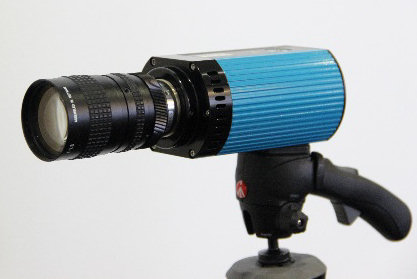 In connection with accidents at night which in most cases involve road users wearing dark clothing, a relevant factor to investigate is the detection distance. In the past, this distance was determined using luminance meters, normally those manufactured by LMT, which measured individual spots (spot photometers). In the last 10 years or so, they have been replaced by camera based imaging systems. Apart from very expensive professional systems that are also used in the automotive industry, for several years now, it has been possible to calibrate commercially available SLR cameras and use them as low-cost luminance meters. Their suitability in principle has been established in several publications. The subject of this paper is a more extensive analysis of the accuracy of this measuring device. To this end, several measurement series were carried out comparing a number of calibrated SLRs and a professional luminance meter analysing the following parameters: 1) Accuracy outside the calibrated luminance range (in which measurements often have to take place) and the influence of these tolerances on the determination of the detection distance. 2) Sources of measurement errors caused by unsuitable aperture and shutter speed settings and 3) investigation of erroneous measurement results caused by specific colours, i.e. does the quality of the result vary depending on the colour of the object that is measured.
(EVU-members can download the full article)