More information
Main author
Tim De Ceunynck
Co-Authors
Freya Slootmans, Philip Temmerman, StijnDaniels
Type of media
Publication type
Lecture
Publication year
2019
Publisher
28 EVU Conference, Barcelona
Citation
-
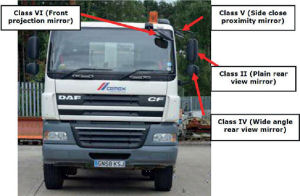
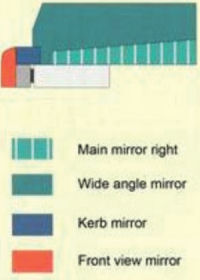
Blind spot crashes are often considered one of the main risks imposed by heavy goods vehicles (HGV) on vulnerable road users’ (VRU) safety. This type of crashes is an important safety issue for VRU, since the severity outcome of such crashes is often very high. Despite the high relevance for road safety, blind spot crashes have rarely been the main focus in scientific studies on VRU safety. With the aim of deepening the understanding of blind spot crashes, this paper brings together analyses of several types of crash data that have been collected in Belgium. The crash data sources that are included in this study are: 1) official national injury crash database; 2) police reports of a sample of 65 blind spot crashes between an HGV and a bicyclist on highways; 3) detailed expert reconstruction reports of 29 severe blind spot crashes between an HGV and a VRU in the city of Antwerp. The police reports sample contained mostly ‘classic’ blind spot crashes, involving an HGV turning right and a VRU going straight. The analyses have allowed to identify five common sub-profiles of the ‘classic’ blind spot crash. The dataset of reconstruction reports, on the other hand, showed a different picture. In this dataset, more than half of the crashes relate to non-right turning crashes. These analyses showed the im-portance of mostly the blind spot immediately in front of the HGV, and, to a lesser extent, behind the HGV. This dataset also contained a substantial amount of blind spot crashes involving pedestrians. The analyses showed that especially older pedestrians are at risk of getting involved in a blind spot crash (usually the blind spot in front of the HGV).
(EVU-members can download the full article)